


Resources
Sharing industry insights with the common goal of reaching zero damages together

Ground-Penetrating Radar vs. Electromagnetic Locating Technology
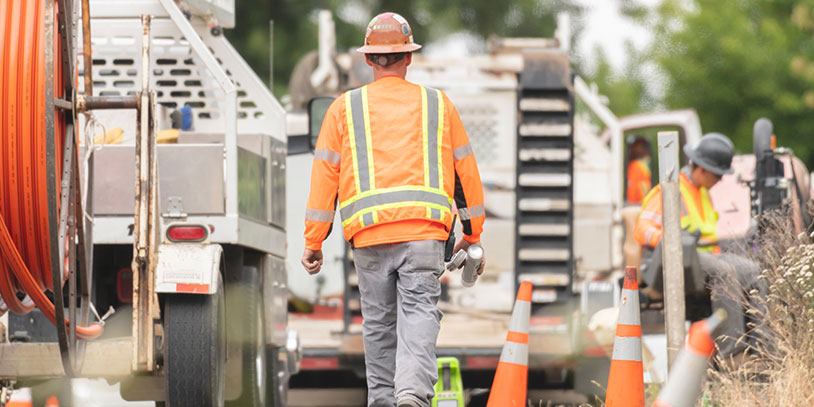
It is the responsibility of a utility locator to locate, identify, and mark underground utilities before any digging, construction, or excavation occurs in an area. The day-to-day work of a professional locator goes far beyond placing flags in the ground or spraying paint to mark facility locations. Utility locating requires advanced observational skills, expert-level deductive reasoning, and the ability to troubleshoot in unpredictable field conditions. To perform at a high level, a locator must also understand the equipment and detection technologies available and when to use each one.
Why Does Locating Equipment Selection Matter for Damage Prevention?
Attention to detail and accuracy are the most critical components of underground utility locating. An imprecise or incomplete locate can lead to a utility strike with consequences that range from costly infrastructure repairs to serious injury or loss of life. When the stakes are that high, being both familiar with and confident in the equipment being used is non-negotiable.
What factors determine which locating equipment to use? The field environment, soil conditions, and the type of underground facility being located all influence which detection technology will produce the most accurate results. The two most widely used locating technologies today are electromagnetic tracing and ground-penetrating radar.
What Is Electromagnetic Tracing and How Does It Work for Utility Locating?
What is electromagnetic (EM) tracing in utility locating? Electromagnetic tracing is the most prevalent method of underground utility detection. EM locators work by detecting the electromagnetic field generated by a current flowing through a conductive utility line. A transmitter applies a signal to the target line, and the locator's receiver traces that signal along the path of the buried facility.
Utility locating equipment has been in use for decades, but adoption has increased significantly in recent years due to higher volumes of underground utilities and the availability of more user-friendly, intuitive devices.
What are the advantages of electromagnetic tracing? EM locators perform well across a wide variety of soil types and field conditions. They are faster to operate and more affordable than ground-penetrating radar units. EM tracing is the go-to method when the utility being located is conductive, such as metallic pipes, cables, or facilities buried with conductive tracing wires, because the technology requires a transmittable signal to function.
What Is Ground-Penetrating Radar and When Should Locators Use It?
What is ground-penetrating radar (GPR) in utility locating? GPR is a newer approach to underground utility detection that has been steadily growing in adoption. GPR units send radar pulses into the ground and measure the reflected signals to identify subsurface objects, regardless of whether those objects are conductive.
How does GPR compare to electromagnetic tracing? GPR locators are more expensive than EM locators, though pricing varies based on the sophistication and feature set of the unit. GPR locating is also more time-consuming than EM tracing, though the technology continues to improve in both speed and accuracy.
When is GPR the better choice for utility locating? The primary advantage of GPR is its ability to detect anything that has a contrast with the surrounding soil, whether the material is conductive or not. This makes GPR the preferred option for locating non-metallic utilities like fiber optic conduit, plastic water and gas lines, and other facilities where electromagnetic tracing cannot gain a proper signal.
How Do Locators Decide Between GPR and Electromagnetic Tracing?
GPR and electromagnetic tracing both serve essential roles in underground utility locating. What should a locator consider when selecting detection equipment? The effectiveness of either technology is extremely site-specific. Factors that influence the decision include:
The type of underground facility being located and whether it's conductive. Ground conditions and soil composition at the dig site. Depth of the buried utility. Signal frequencies available and potential interference from adjacent utilities or structures.
No single technology covers every scenario. The most effective locators understand the strengths and limitations of both EM and GPR equipment and select the right tool based on the conditions they encounter in the field.
What matters most in utility locating accuracy? While both GPR and electromagnetic tracing add significant capability to the locating process, no technology replaces a dedicated, detail-oriented utility locating professional who understands how to interpret the data their equipment provides and make sound field decisions based on it.
About KorTerra, Inc.
KorTerra is the leading provider of damage prevention software, protecting billions of dollars in underground infrastructure. For over 30 years, the leading stakeholders in gas distribution, pipeline operation, telecommunications, electric distribution, contract locating, and city, county, and state governments have trusted KorTerra as their damage prevention solution. KorTerra helps mitigate risk and ensure the safety of field personnel by providing secure software platforms for processing 811 locate tickets, tracking and reporting asset damages, meeting regulatory compliance, and more. Explore additional solutions at korterra.com and follow KorTerra on LinkedIn.
Media Contact:
Paige Nygaard – KorTerra, Inc.
952.368.1911
marketing@korterra.com