


Resources
Sharing industry insights with the common goal of reaching zero damages together

6 Reasons Locate Programs Lose Ground When Experienced Locators Leave
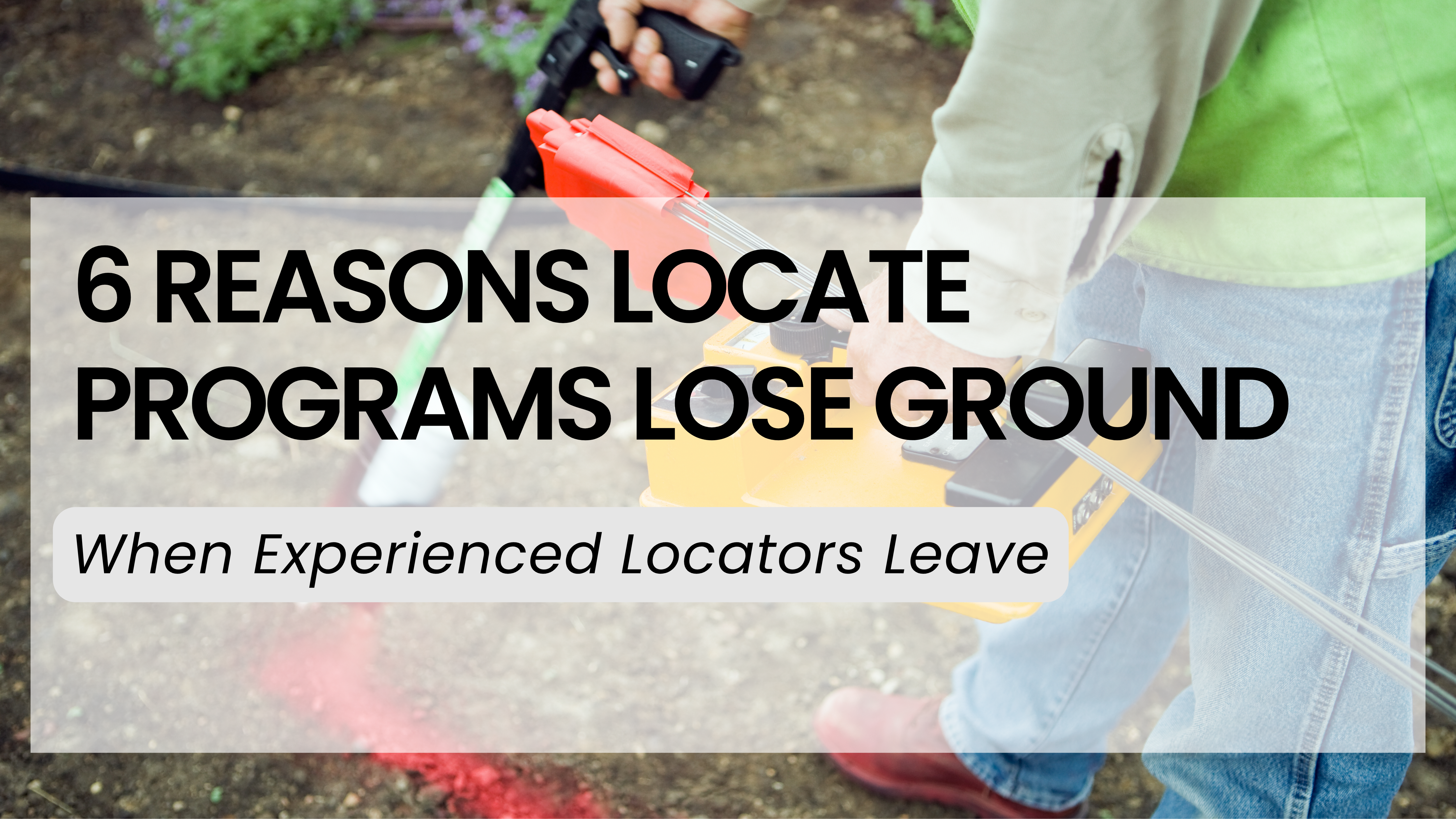
Locate staffing is already tight. Add a summer ticket surge and the math gets worse fast: more volume, compressed timelines, and a field workforce that's been shrinking for years as experienced locators age out, and fewer people enter the trade to replace them.
When a veteran locator leaves mid-season, the immediate problem is coverage. The longer-term problem is everything they knew that never got written down. According to the CGA DIRT Report, human error and improper locating practices are among the leading contributors to buried utility damages year after year. Experienced staff don't eliminate that risk, but they carry informal safeguards that newer teams haven't built yet. Here's where those gaps show up first.
1. Ticket routing gets slower and less accurate
Experienced locators develop a working knowledge of routing patterns over years in the field: which ticket types require immediate attention, which geographic areas have infrastructure complexity, which assignments need a senior eye before dispatch. When they leave, that informal logic disappears with them.
Newer staff route by the rules they were trained on, not the judgment calls that come from years of seeing what goes wrong. Tickets that used to get flagged and reviewed start moving through without that layer of scrutiny. Damage rates don't spike overnight. They inch up quietly while the data lags behind.
Bottom line: When routing depends on institutional memory rather than documented logic, every departure resets the clock on accuracy.
2. New hires learn the steps, not the judgment calls
Onboarding documentation covers the workflow steps. Rarely does it capture the decision-making behind them. A new locator can learn how to process a ticket in a few days. Knowing when to push back on a job assignment, when to escalate an unclear mark, or when a particular excavator's history warrants a closer look takes months of proximity to someone who already has that context.
When turnover happens mid-season, that proximity isn't available. Experienced locators are running at capacity keeping up with volume. Training becomes a checklist exercise rather than a knowledge transfer. New hires are functional faster than they're capable.
Bottom line: Locate programs that rely on informal mentorship to close the judgment gap are most vulnerable when turnover and peak season overlap.
3. Compliance documentation slips below the standard that protects you
Experienced locators know what complete documentation looks like because they've seen what incomplete documentation costs. They add the photo that covers an ambiguous mark. They write the note that makes an audit defensible six months later. They know the difference between documentation that technically exists and documentation that actually protects the organization.
That standard is harder to enforce and harder to teach when the people who set it are gone. PHMSA's pipeline safety data consistently shows that inadequate documentation and locate errors compound each other during damage investigations. When the workforce turns over, the institutional standard for acceptable documentation often turns over with it.
Bottom line: Documentation quality is a lagging indicator. By the time audit gaps surface, the workforce conditions that created them are months old.
4. Contractor performance tracking falls apart
Veteran staff carry an informal knowledge base about contractor behavior: who performs consistently, who needs closer tracking, who has a pattern of returning tickets incomplete. That context shapes how supervisors assign work, what they flag for review, and where they focus audit attention.
When that knowledge leaves, contractor oversight defaults to whatever the formal reporting system surfaces. If ticket management tools aren't capturing performance data at the contractor level, programs lose visibility at exactly the moment they need it most. A new supervisor starts from scratch on relationships and track records that took years to build.
Bottom line: Contractor oversight that lives in someone's memory rather than a tracking system doesn't survive turnover intact.
5. Near-miss incidents stop getting reported
Experienced locators report near-misses and anomalies because they understand what that data is worth. They've seen a near-miss become a damage event when it got ignored. Newer staff often underreport, not out of negligence, but because they don't yet have the context to recognize what's worth escalating.
The CGA's research has identified underreporting of near-miss incidents as a persistent gap in damage prevention programs. Workforce turnover compounds it. A team that skews younger and less experienced generates less near-miss data, not because fewer near-misses occur, but because fewer get recognized and recorded.
Bottom line: Near-miss reporting drops when the people who know what to look for are no longer in the field.
6. Every gap gets stress-tested at peak volume
Locator turnover is an operational challenge year-round. During summer surge, it becomes a risk management problem. Ticket volumes spike. Timelines compress. Supervision gets stretched. Every gap in routing judgment, documentation quality, and contractor oversight gets tested at exactly the moment there's the least capacity to absorb a failure.
DIRT Report data shows a consistent correlation between increased excavation activity and elevated damage rates. Programs that enter summer with workforce instability face that increase without the informal safeguards that experienced staff provide.
Hiring faster helps, but it doesn't solve the structural problem. Ticket management systems that capture routing logic, document contractor performance, and make compliance requirements visible and trackable give programs a foundation that holds up when the workforce changes, because it will change.
Bottom line: Summer doesn't create locate program weaknesses. It exposes the ones that were already there.
Protecting your program from knowledge loss starts with what your system captures.
KorTerra's ticket management tools help utilities, municipalities, and locate programs maintain operational consistency regardless of workforce changes. See what's possible on our products page.
About KorTerra, Inc.
KorTerra is the leading provider of damage prevention software, protecting billions of dollars in underground infrastructure. For over 30 years, the leading stakeholders in gas distribution, pipeline operation, telecommunications, electric distribution, contract locating, and city, county, and state governments have trusted KorTerra as their damage prevention solution. KorTerra helps mitigate risk and ensure the safety of field personnel by providing secure software platforms for processing 811 locate tickets, tracking and reporting asset damages, meeting regulatory compliance, and more. Explore additional solutions at korterra.com and follow KorTerra on LinkedIn.
Media Contact:
Paige Nygaard – KorTerra, Inc.
952.368.1911
marketing@korterra.com